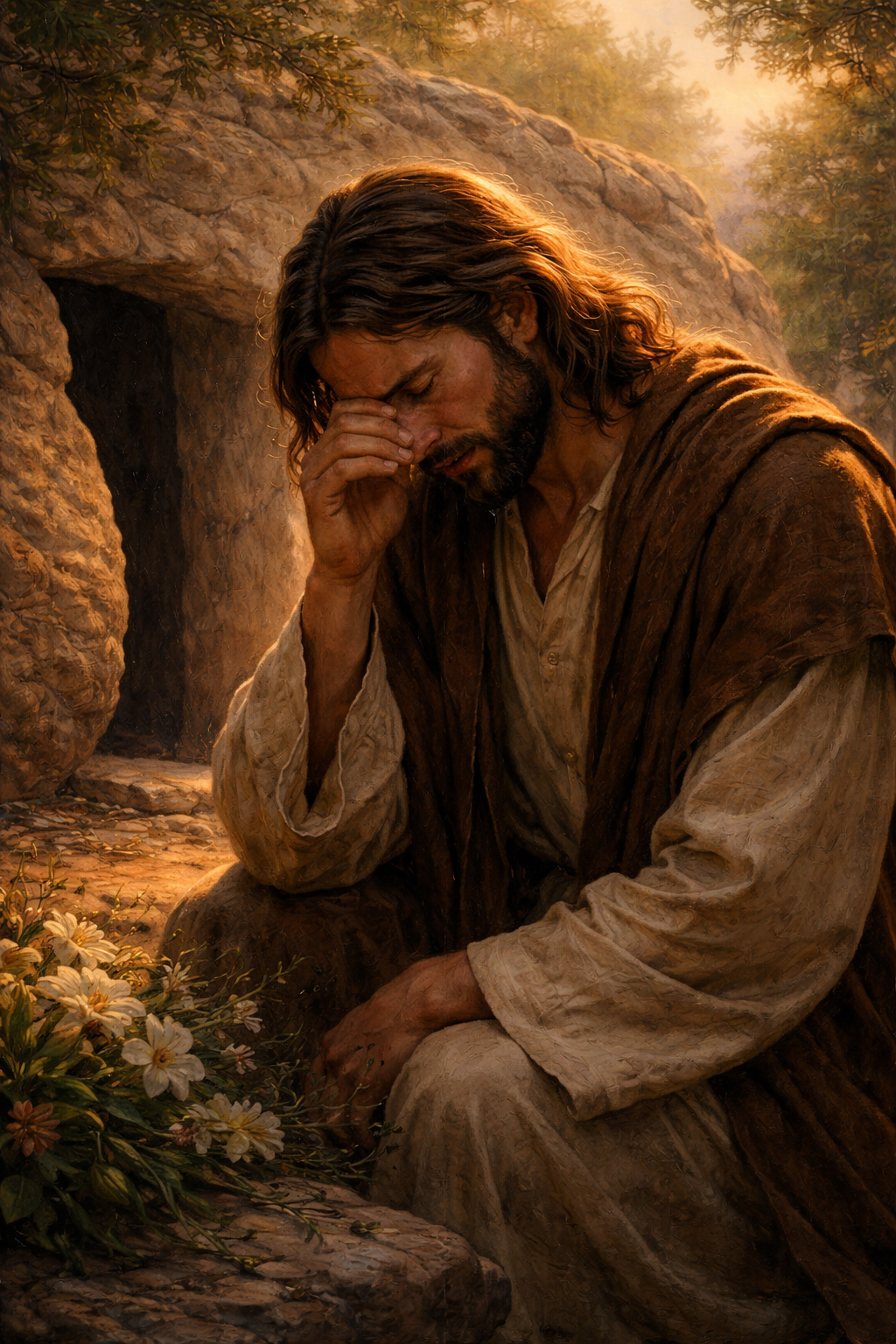
The Question Behind the Shortest Verse in the Bible
It is the shortest verse in the Bible. Two words in English. One sentence that has confused people for two thousand years.
“Jesus wept” (John 11:35).
The confusion is understandable. Jesus knew He was about to raise Lazarus from the dead. He told the disciples before they arrived: “This sickness is not to end in death, but for the glory of God” (John 11:4). He delayed His trip intentionally. He knew the outcome.
So why did He cry?
What Happened Before the Tears
Lazarus — one of Jesus’s closest friends — had been dead four days. Martha met Jesus on the road: “Lord, if You had been here, my brother would not have died” (John 11:21). Faith and accusation in one sentence.
Jesus told her, “I am the resurrection and the life.” Martha gave the correct theological response. Then Mary came. Same words. But she fell at His feet. She was weeping. The Jews with her were weeping.
And verse 33: “When Jesus therefore saw her weeping, and the Jews who came with her also weeping, He was deeply moved in spirit and was troubled.”
What “Deeply Moved” Actually Means
The English phrase “deeply moved” undersells the Greek. The word is embrimaomai — and it does not mean sadness. It means indignation. Anger. The snorting of a horse. It is a word associated with fury.
Jesus was not just sad. He was angry. At what? At death itself — the invasion of death into a world God made for life. He was looking at the grief on the faces of people He loved and seeing the destruction that sin had introduced into creation. This was God furious at the enemy that was tearing His people apart.
And then He wept. Not because He was helpless. Because He was present. He entered the grief fully — felt the weight of what death does to people — even though He knew He was about to reverse it.
Why Jesus Wept Matters
Jesus did not skip ahead to the miracle. He did not say, “Stop crying, I am about to fix this.” He stood at the grave of His friend and wept with the people He loved.
This tells you something essential about God’s character. He does not fast-forward through your pain. He does not stand at a distance offering theological explanations. He enters it. He feels it. He weeps with you even when He already knows the ending.
And then He acts. “Lazarus, come forth!” And a dead man walked out.
The God who weeps is also the God who raises the dead. He holds your grief and your hope in the same hands.
Going Deeper in John 11
The Lazarus story is the climactic sign in John’s Gospel. My study guide The Shepherd Who Gives Life: A Deep Dive into John 10-12 covers the entire chapter verse by verse, including the word study on embrimaomai. Find it at biblebytes24.gumroad.com
Leave a Reply