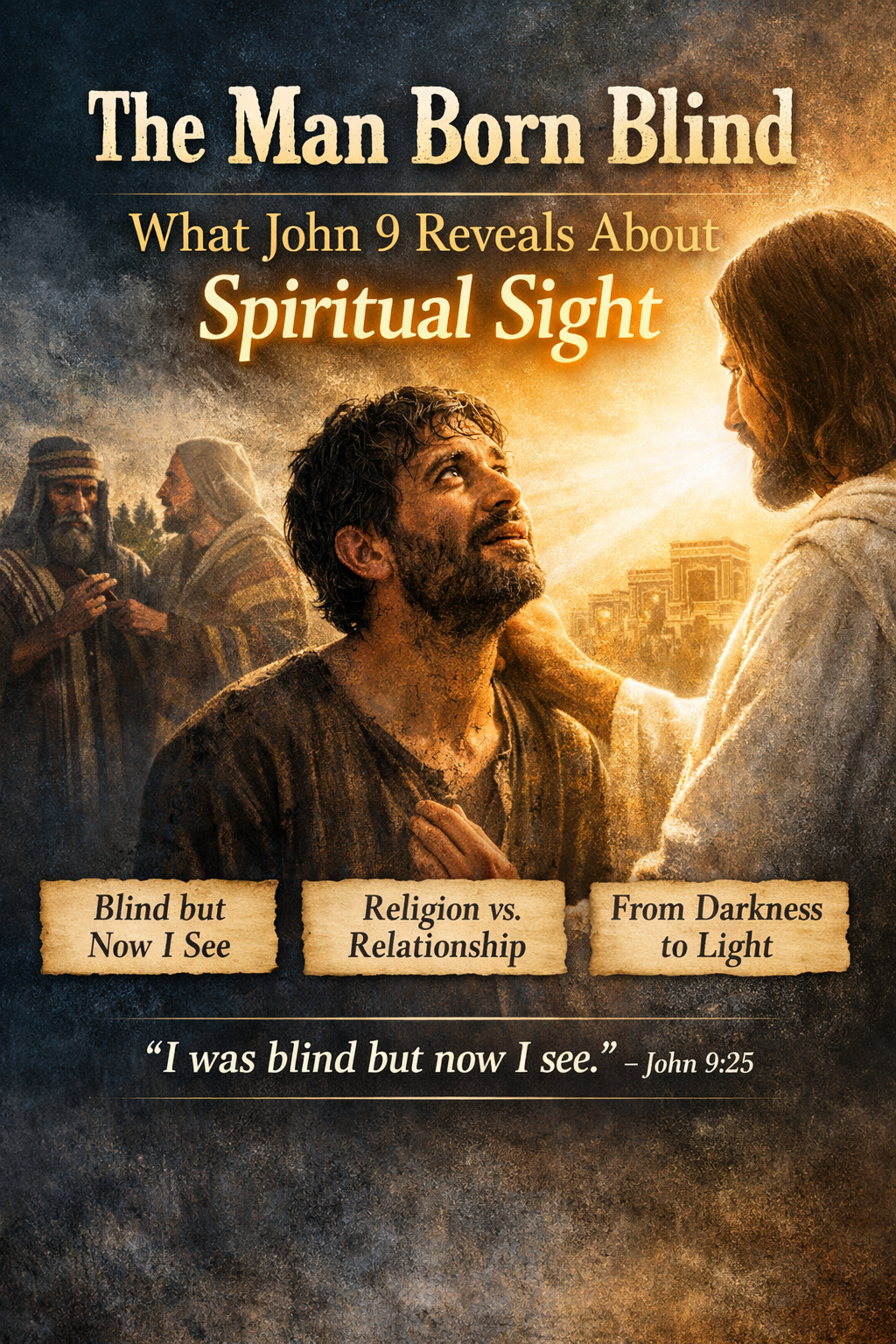
Man Born Blind Meaning: What John 9 Reveals About Spiritual Sight
What does the story of the man born blind in John 9 really mean? This chapter is about more than a miracle — it reveals how Jesus gives spiritual sight, challenges false assumptions about suffering, and exposes those who think they see but are actually blind.
Of all the people Jesus healed in the Gospels, the man in John 9 may be the most important.
Not because of the miracle itself.
But because of what happened after.
A man blind from birth receives sight.
And the people who could see perfectly well prove to be the truly blind ones.
The Question That Started Everything
The disciples opened with a theology question:
“Rabbi, who sinned, this man or his parents, that he would be born blind?” (John 9:2).
This was standard thinking at the time:
Suffering must come from someone’s sin.
A simple equation:
- sickness = guilt
- health = righteousness
But Jesus dismantled that idea immediately:
“It was neither that this man sinned, nor his parents; but it was so that the works of God might be displayed in him” (John 9:3).
This is one of the most freeing truths in Scripture.
Not all suffering is punishment.
Sometimes suffering exists so that God’s work can be revealed.
The man’s blindness wasn’t a verdict.
It was a stage.
The Mud, the Pool, and the Miracle
What Jesus did next was unusual.
He made mud, placed it on the man’s eyes, and told him to wash in the Pool of Siloam.
Why mud?
There’s a clear echo of creation.
In Genesis, God formed man from the dust.
Here, Jesus is not just healing.
He is creating.
Not repairing broken eyes.
Making new ones.
Even the location matters.
Siloam means “sent.”
The man was sent to wash.
Jesus is the one sent by the Father.
And the man obeyed — while still blind.
He walked in darkness.
And came back seeing.
The Interrogation: When Sight Threatens Religion
What follows is one of the longest interrogation scenes in the Gospels.
The Pharisees question:
- the man
- his parents
- the man again
They are trying to discredit the miracle.
Why?
Because it happened on the Sabbath.
And it threatened their authority.
But the man’s clarity grows stronger each time:
- “He is a prophet” (9:17)
- “I was blind, now I see” (9:25)
- “If this man were not from God…” (9:33)
A former beggar is now out-arguing religious leaders.
And they respond the only way they can:
They throw him out.
When Jesus Finds the One Who Was Cast Out
After the man was expelled, Jesus went looking for him.
Not the other way around.
Jesus asked:
“Do you believe in the Son of Man?” (John 9:35)
The man answered:
“Who is He, Lord, that I may believe in Him?”
Jesus said:
“You have both seen Him, and He is the one speaking with you” (John 9:37).
The first person this man ever truly saw…
Was Jesus.
And his response was worship:
“Lord, I believe.”
The Real Meaning of Spiritual Blindness
Jesus ends the chapter with a powerful statement:
“So that those who do not see may see, and those who see may become blind” (John 9:39).
This is the reversal:
- The blind man now sees
- The religious leaders remain blind
The most dangerous condition isn’t blindness.
It’s thinking you can already see.
Why John 9 Still Matters Today
John 9 isn’t just about physical sight.
It’s about spiritual awareness.
When Jesus — the Light of the World — shows up:
- some people receive sight
- some realize they were blind
- some refuse to admit it
And that’s the dividing line.
The real question is:
Do you know you need sight?
Because Jesus only heals those who know they’re blind.
Go Deeper into John 7–9
I walk through this entire section — including the Feast of Tabernacles and the woman caught in adultery — in a deep-dive video.
Search BibleBytes24 on YouTube or visit:
youtube.com/@BibleBytes24
Final Thought
The miracle in John 9 isn’t just about seeing.
It’s about recognizing who Jesus is.
And responding.
Leave a Reply