I Am the Door Meaning: John 10 Explained
The Overlooked “I AM” Statement in John 10
Everyone knows “I am the Good Shepherd.” But just a few verses earlier, Jesus makes a different “I AM” claim that most people skip right over — and it’s just as radical.
“I am the door; if anyone enters through Me, he will be saved, and will go in and out and find pasture” (John 10:9).
Before Jesus called Himself the shepherd, He called Himself the door. And the two claims work together in a way that most people miss.
What a “Door” Meant for Sheep
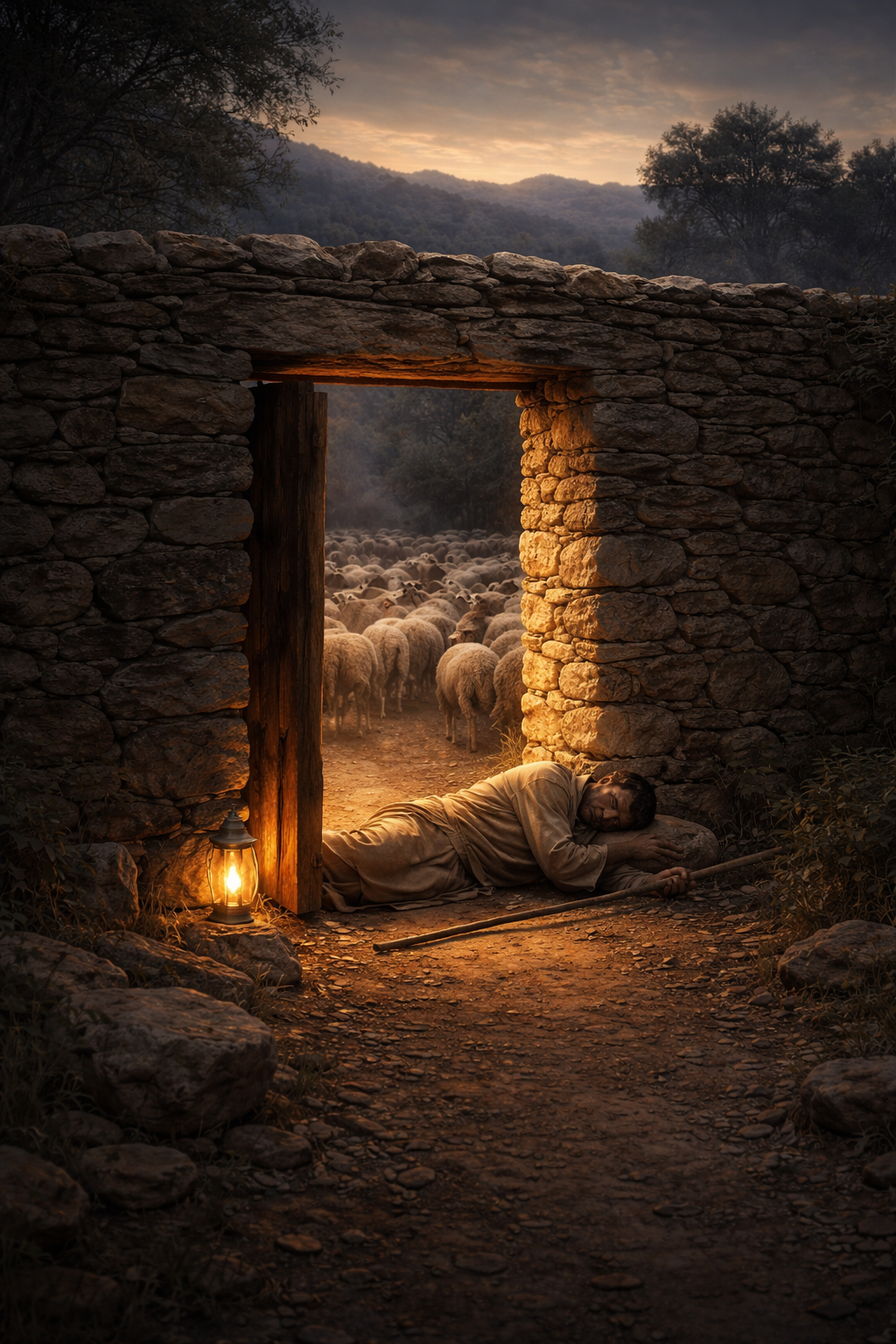
In first-century Palestine, sheepfolds were stone-walled enclosures where multiple flocks would be gathered at night for protection. They typically had one opening — no gate, no latch, no lock. The shepherd himself would lie down in the opening and sleep there. His body was the door. Nothing got in or out without going through him.
When Jesus says “I am the door,” He’s not using an abstract metaphor. He’s describing something His audience had literally seen — a shepherd using his own body as the barrier between the sheep and everything that would harm them.
What “I Am the Door” Actually Means
Three things happen when you enter through the door.
First, salvation: “he will be saved.” The sheep inside the fold are protected. Wolves, thieves, and predators can’t get past the shepherd lying in the doorway. Salvation in this metaphor isn’t just a future destination — it’s a present security. You’re inside the protection of someone who is physically positioned between you and whatever would destroy you.
Second, freedom: “will go in and out.” This isn’t a prison. The sheep aren’t locked inside. They go in for protection and go out for pasture. There’s freedom of movement — but the door is always the entry and exit point. Life in Christ isn’t confinement. It’s freedom that flows through one consistent access point.
Third, provision: “and find pasture.” The sheep don’t just survive. They eat. They’re nourished. The door leads to green pasture — a life that is genuinely full, not just safe.
The Exclusive Claim of Jesus as the Door
Before this, Jesus said something that sets up the door metaphor: “All who came before Me are thieves and robbers, but the sheep did not hear them” (John 10:8). And: “I am the door; if anyone enters through Me, he will be saved” (10:9).
Through Me. One door. Not many doors. Not several options. One.
This is an exclusive claim in a culture that doesn’t like exclusivity. But Jesus doesn’t soften it. He says it again differently in John 14:6 — “no one comes to the Father but through Me.” The Good Shepherd metaphor is gentle. The door metaphor is absolute. He’s both. Tender enough to lie down for the sheep. Firm enough to say: this is the only way in.
The Practical Question: Have You Entered the Door?
Most of us like the idea of Jesus as shepherd — caring, guiding, protective. But the door metaphor asks a harder question: have you actually entered? It’s not enough to admire the shepherd from a distance or agree that He’s good. The door requires you to walk through it.
Walking through means trusting Him with your security instead of building your own walls. It means accepting that other doors — other paths to God, other sources of salvation — aren’t actually doors at all. It means entrusting yourself to the one who lies down in the gap between you and destruction.
That’s not casual agreement. That’s commitment.
For Seasons When You Need the Door
If you’re in a season where you need to feel protected — where the wolves feel close and the walls feel thin — QuickStudy Vol. 1: Hope & Healing walks through 20 verses about what God promises when you feel forgotten, afraid, or weak. Each verse includes the original Hebrew or Greek, the real context, and an honest question. It’s designed to take about as long as your morning coffee and leave you with something that stays.
Find it here


Leave a Reply