Why This Passage Is Often Misunderstood
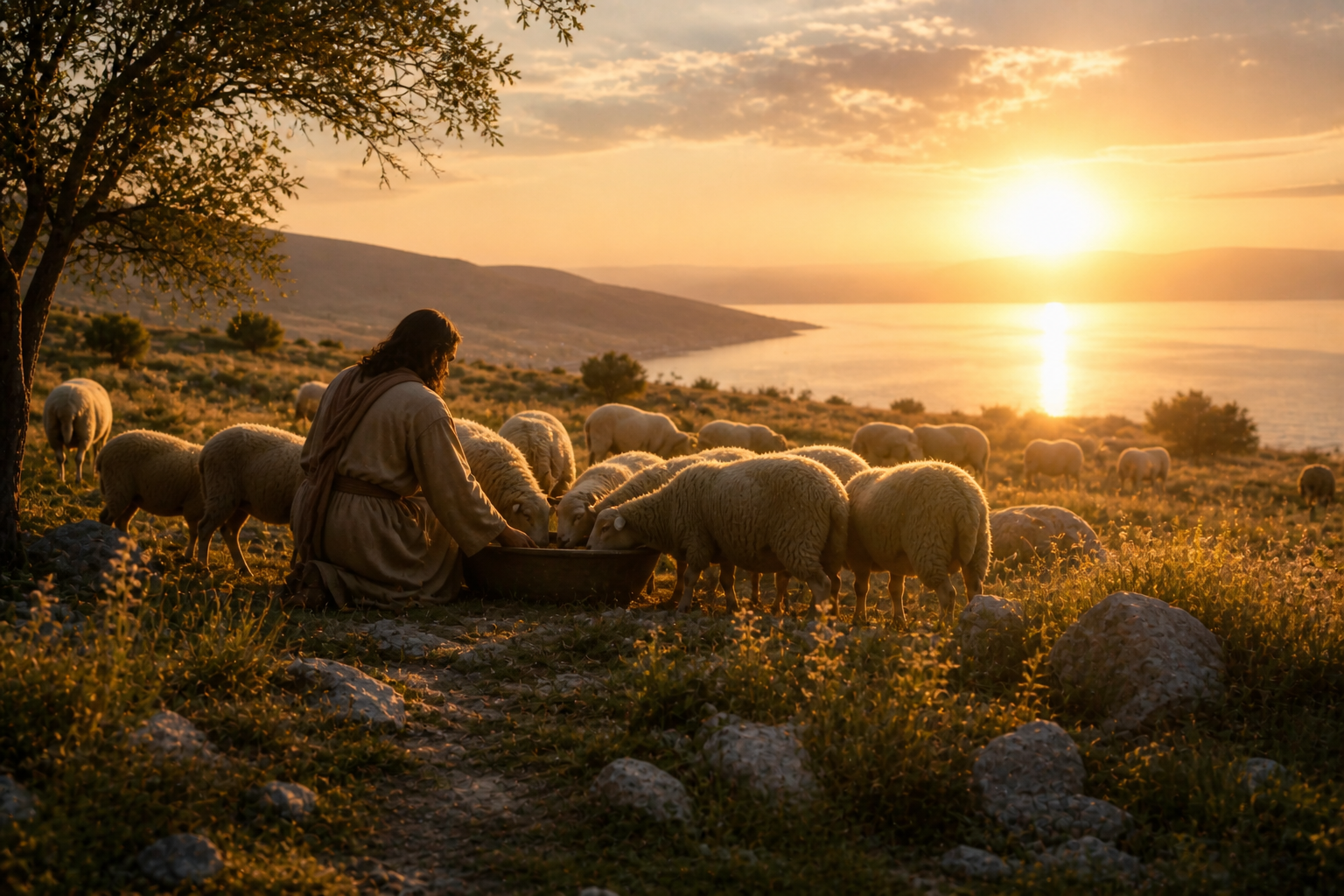
In English, Jesus says the same thing three times to Peter after the resurrection: feed my sheep. It reads like repetition for emphasis. But in the Greek text, Jesus used two different words — and the distinction reveals a commission far bigger than most people realize.
The Three Commands
After the first question, Jesus said: “Feed My lambs” (John 21:15). The word is boskō (βόσκω) — it means to feed, to provide nourishment, to pasture. It is the basic, essential act of making sure the flock eats. A shepherd who does not feed the sheep has failed at the most fundamental level.
After the second question, Jesus said: “Shepherd My sheep” (John 21:16). The word changes. It is poimainō (ποιμαίνω) — and it means far more than feeding. Poimainō means to tend, to guide, to rule, to protect, to lead. It is the full scope of shepherding — not just providing food but providing direction, safety, correction, and care.
After the third question, Jesus returned to the first word: “Feed My sheep” (John 21:17). Back to boskō. Back to nourishment. Back to the basics.
The pattern is deliberate. Feed. Shepherd. Feed. Nourishment surrounds leadership. The provision bookends the authority. As if Jesus is saying: before you lead them, feed them. And after you lead them, feed them again. Never let the authority outrun the nourishment.
What the Flock Words Reveal
Jesus also changed the word for the flock itself. In the first command, He said “My lambs” — arnia, the diminutive form. Baby sheep. The young, the vulnerable, the new believers who do not know much yet and need to be nourished gently.
In the second and third commands, He said “My sheep” — probata, the mature flock. The grown sheep who need not just food but shepherding — direction, protection, accountability.
Peter was not being given one job. He was being given a layered commission: nourish the young. Lead the mature. And nourish them all again. The work of ministry is not one thing. It is feeding and leading and feeding again, endlessly, for as long as there are sheep who need a shepherd.
Why Boskō Matters
Boskō is unglamorous work. It is not preaching to crowds. It is not theological brilliance. It is not platform building. It is making sure people eat.
In practical terms, boskō is the person who opens their Bible with someone new and walks them through a passage slowly. It is the study guide that breaks a chapter into daily readings so people can actually digest it. It is the blog post that takes one verse and makes it accessible to someone who has never studied Greek and never will. It is feeding.
The church has always been tempted to elevate poimainō — the leadership, the authority, the vision-casting — over boskō. But Jesus put boskō first and last. Feed them. Then lead them. Then feed them again. Leadership without nourishment produces hungry sheep. And hungry sheep wander.
Why Poimainō Matters
But feeding alone is not enough. Poimainō includes protection — driving away wolves, guarding the flock from false teaching, standing between the sheep and whatever would destroy them. It includes guidance — leading the sheep to water, choosing the right pasture, knowing when to move and when to stay. It includes correction — the shepherd’s rod was used to nudge a wandering sheep back into line, not to beat it.
Peter would go on to exercise all three. He preached (feeding). He led the early church through its most dangerous years (shepherding). He wrote letters correcting false teaching and encouraging persecuted believers (protecting). The three commands on the beach became the blueprint for his entire ministry.
What This Means for You
You may never preach to thousands. You may never write a theological treatise. You may never lead a church or plant a ministry. But you can feed someone.
Boskō is available to every believer. You can open your Bible with a friend. You can share a verse that changed how you see God. You can sit with someone who is struggling and point them to truth. You can feed the lambs in your living room, in your small group, in your text messages, in your quiet conversations after church.
And if God calls you to poimainō — to lead, to protect, to guide — let it always be wrapped in boskō. Feed first. Lead second. Feed again. That is the pattern Jesus gave to the man He was restoring by a charcoal fire, and it has not changed.
Watch More on YouTube
For more Bible teaching, Greek word studies, and daily Scripture encouragement, subscribe to BibleBytes24 on YouTube at @BibleBytes24.