Pentecost Was Never Meant to Stay Behind Glass
Heaven didn’t knock at Pentecost.
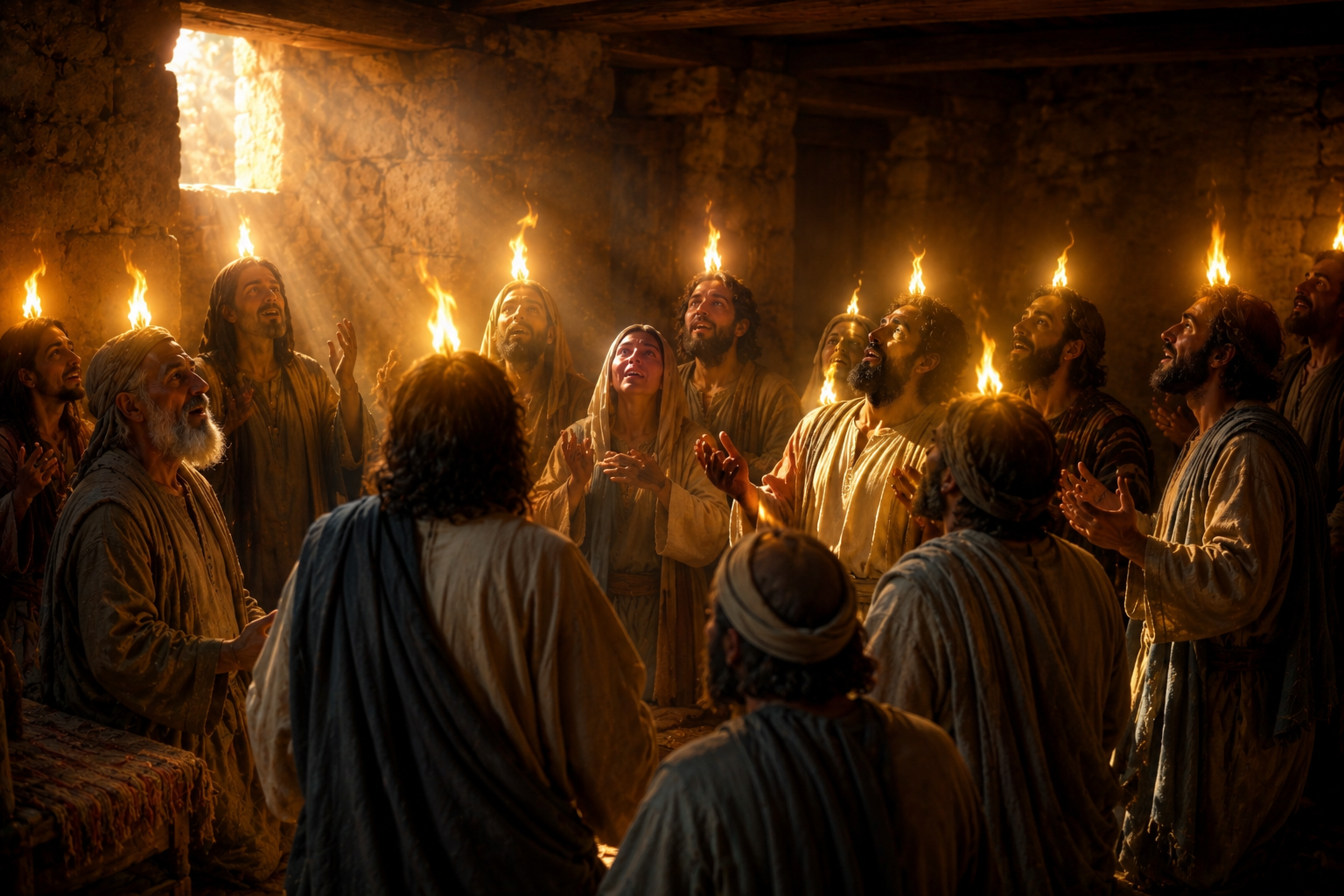
The wind came through the upper room. Tongues of what looked like fire rested on each of them. They started speaking in languages they had never learned. Three thousand people came to Christ that day. And most modern Christians read it like a museum exhibit — beautiful, important, behind glass.
But Pentecost wasn’t a one-time event. It was a doorway. And once you understand what was actually happening — the festival, the languages, the prophecy Peter quoted — Acts 2 stops being a strange chapter and starts being the most important Tuesday in church history.
Pentecost Was Already a Festival
This is the layer most teaching skips. Pentecost wasn’t invented in Acts 2. The word comes from the Greek ‘pentēkostē’ meaning fiftieth — fifty days after Passover. The Hebrew name is Shavuot. It was already a Jewish pilgrimage festival, one of three when every Jewish man in the world was supposed to come to Jerusalem.
And it wasn’t a generic harvest festival. By the first century, Shavuot was widely associated with the giving of the Law at Mount Sinai. The same fifty-day count from Passover (the Exodus) to Sinai (the Law) was being commemorated annually.
So at the first Pentecost, fifteen hundred years earlier, God wrote His Law on tablets of stone. At THIS Pentecost, He’s about to write it on the human heart. Same festival. Same fifty days. New covenant.
The Wind, the Fire, and the Languages
Acts 2:2-4 records three signs. A sound like a violent wind. Tongues like fire. And speaking in other languages. None of them are random.
Wind in Hebrew (ruach) and Greek (pneuma) are the same words used for Spirit. Fire is the symbol God used at Sinai to mark His presence. And the languages — that’s the part most teaching glosses over.
Babel in Reverse
Genesis 11 records the Tower of Babel. Humanity, unified in language, decided to build a tower to make a name for themselves. God scattered them by confusing their language. From that moment forward, language has been a barrier between peoples.
Now read Acts 2:5-11. People from every nation under heaven hear the disciples speaking in their own native tongue. Parthians. Medes. Elamites. Mesopotamians. Cretans. Arabs. The list reads like a map of the known world.
It’s not a coincidence. It’s a deliberate reversal. At Babel, God scattered humanity through language. At Pentecost, He gathers humanity through language — overcoming the barrier with His Spirit. The curse is being undone.
Peter’s Sermon
Peter stands up and preaches what is, by any measure, the most consequential sermon in church history. It’s about three minutes long if you read it out loud. And it has three things in it.
• This is what Joel said would happen. Peter quotes Joel 2:28-32 — ‘In the last days, God says, I will pour out my Spirit on all people.’ He’s announcing that we are now living in the last days. Pentecost wasn’t a moment. It was a doorway into an era.
• Jesus is the One you crucified, the One God raised, the One David prophesied about. Peter walks the crowd from the cross to the resurrection to Psalm 16, and lands on Christ. He’s not preaching a movement. He’s preaching a Person.
• Repent and be baptized — for the forgiveness of your sins, and you will receive the gift of the Holy Spirit. The same Spirit they just witnessed is now offered to anyone who believes.
Three thousand people respond that day. Three thousand. And Acts 2:42 begins describing the first church.
Why Pentecost Wasn’t a One-Time Event
Notice what Peter quotes in Joel 2: ‘In the LAST DAYS, God says, I will pour out my Spirit on ALL PEOPLE.’ Peter is announcing that Pentecost isn’t a moment. It’s an era.
We are still in the last days. The Spirit is still poured out. The same Spirit who filled the upper room is in every believer who reads this. The wind sound was a one-time event. The Spirit who came on the wind is not.
What This Means for You
If you belong to Jesus, the Spirit is in you (Romans 8:9, 1 Corinthians 6:19). That’s not a metaphor. That’s the same Person who turned Peter from a denier into a preacher in six weeks. The same Person who pulled Philip out of a citywide revival to go talk to one man on a desert road. The same Person who interceded for Paul through every prison cell.
He’s not saving His best work for the apostles. He’s living in you. The question isn’t whether Pentecost can happen again. The question is whether we’re going to keep treating Acts like history when it’s still being written.
How to Cooperate With the Holy Spirit
You don’t have to manufacture the Spirit. You have to learn to cooperate with Him. Listen when He nudges. Obey when He leads. Speak when He prompts. Stay quiet when He says wait.
The early church didn’t have a method. They had a Person. The same Person we have.
Acts 2 isn’t behind glass. It’s in front of you, every day, in the Spirit who’s never left.