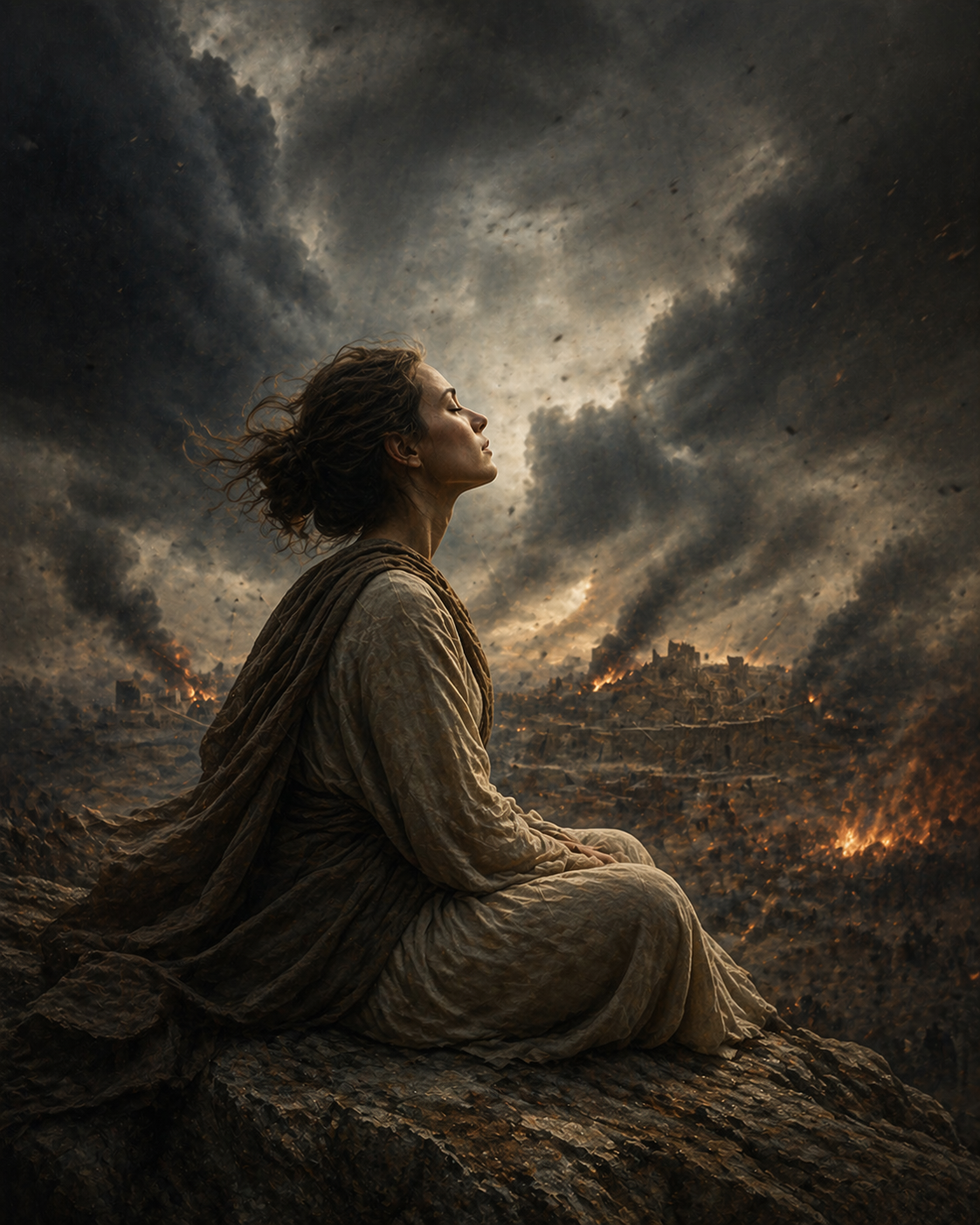
You have seen this verse everywhere. It is cross-stitched on pillows. Printed on mugs. Floating over sunset photos on Instagram. “Be still and know that I am God” has become the unofficial motto of the spiritual self-care movement — a verse people reach for when they need to slow down, breathe, and find a little peace.
There is one problem. That is not what it means.
Psalm 46:10 was never a whisper. It was never spoken to someone soaking in a bath or journaling at sunrise. And it was never an invitation to meditate. It was a command — issued in the middle of total destruction — to people who were fighting for their lives.
The Context No One Reads
If you only know Psalm 46:10, you have read the climax without the story. Here is what comes before it.
Psalm 46 opens with the earth giving way. Mountains are collapsing into the sea. Waters are roaring and foaming. The imagery is not peaceful. It is apocalyptic. By the time you reach verse 6, nations are in uproar, kingdoms are toppling, and the earth itself is melting at the sound of God’s voice.
This is not a quiet morning devotional. This is a war poem.
And in the middle of that war — surrounded by falling kingdoms and raging seas — God speaks. Not to comfort. To command. “Cease striving and know that I am God.”
What “Cease Striving” Actually Means
The NASB translates the Hebrew more precisely than most English versions. Where many read “be still,” the original Hebrew word is raphah. And raphah does not mean “be quiet” or “calm down.”
Raphah means to let go. To release your grip. To abandon what you are holding onto. It carries the image of hands opening — of dropping the weapons, the plans, the illusion of control. In a military context, it is the command a general gives when the battle is over: stand down.
God was not suggesting relaxation. He was commanding surrender.
Why This Matters Right Now
Most of us are not on a literal battlefield. But we are fighting. We fight to control outcomes we cannot predict. We fight to hold relationships together by force of will. We fight to keep careers, finances, and families from falling apart — and we do it by gripping harder, planning more, and refusing to let go.
And into that fight, God says the same thing He said three thousand years ago: raphah. Let go.
Not because the chaos is not real. It is. Not because the danger does not matter. It does. But because the One standing in the middle of the chaos is the same God who melts the earth with His voice. The same God the psalmist calls “our refuge and strength, a very ready help in trouble.”
He does not need you to hold it together. He needs you to stop pretending you can.
What Would It Look Like Today?
What if “be still” is not a posture at all, but a decision? Not sitting quietly, but releasing the outcome you have been strangling with your planning. Not finding peace, but admitting you were never in control of what happens next.
What would it look like to stop fighting God for control today? Not tomorrow. Not when things calm down. Today — in the middle of the mess. Hands open. Weapons down. Full weight on the only foundation that does not shake.
That is what the psalmist meant. Stillness is not peace you find. It is control you release.